
Every technique is a philosophy.
Two methods. Each one a different relationship between the maker, the loom, and the raw organic material.
Hand Tufted
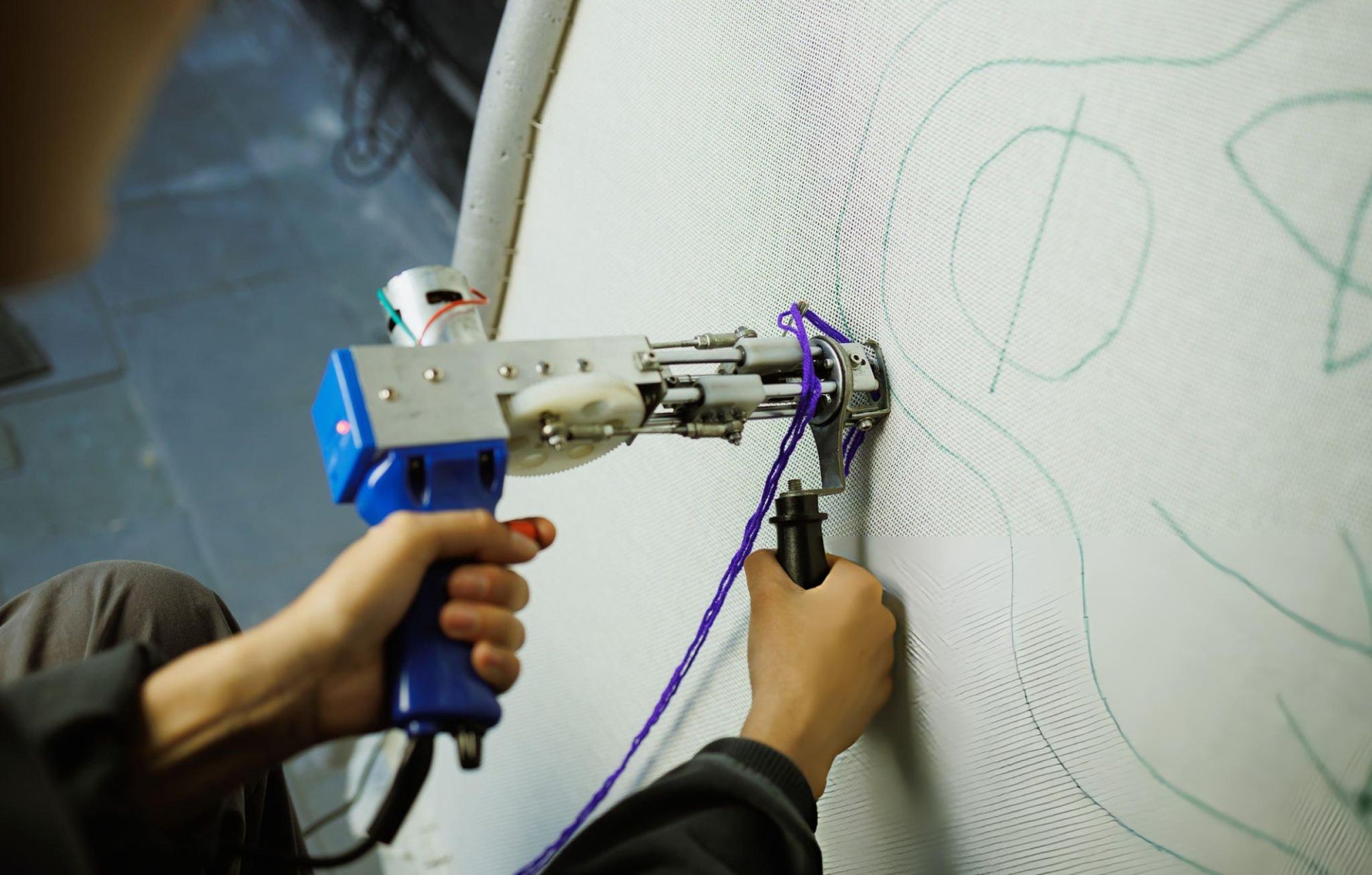
Hand tufting is an extraordinary marriage of ancient material wisdom and dynamic speed. An artisan guides a specialized pneumatic tufting gun loaded with natural wool yarn across a vertically stretched canvas backing. Working from the reverse side of the canvas, which features a projected or hand-drawn digital pattern, they punch loop after loop through the fabric cells.
Once the tufting is complete, the rug is laid face-down. A natural, non-toxic latex coating is hand-applied to the backing to anchor the threads permanently, followed by a clean cotton canvas lining. The face is then sheared, washed, and masterfully hand-carved with bevel shears, creating structural valleys, waves, and ridges that yield rich tactile variation.
| Production Time | 1 to 3 weeks depending on design scale |
| Pile Height | 8mm to 25mm (sculpted variations) |
| Backing Material | Protective cotton canvas with raw latex seal |
| Best For | Bold geometric patterns, deeply textured relief lines |
| Typical Lifespan | 10 to 15 years under active residential use |
Hand Knotted
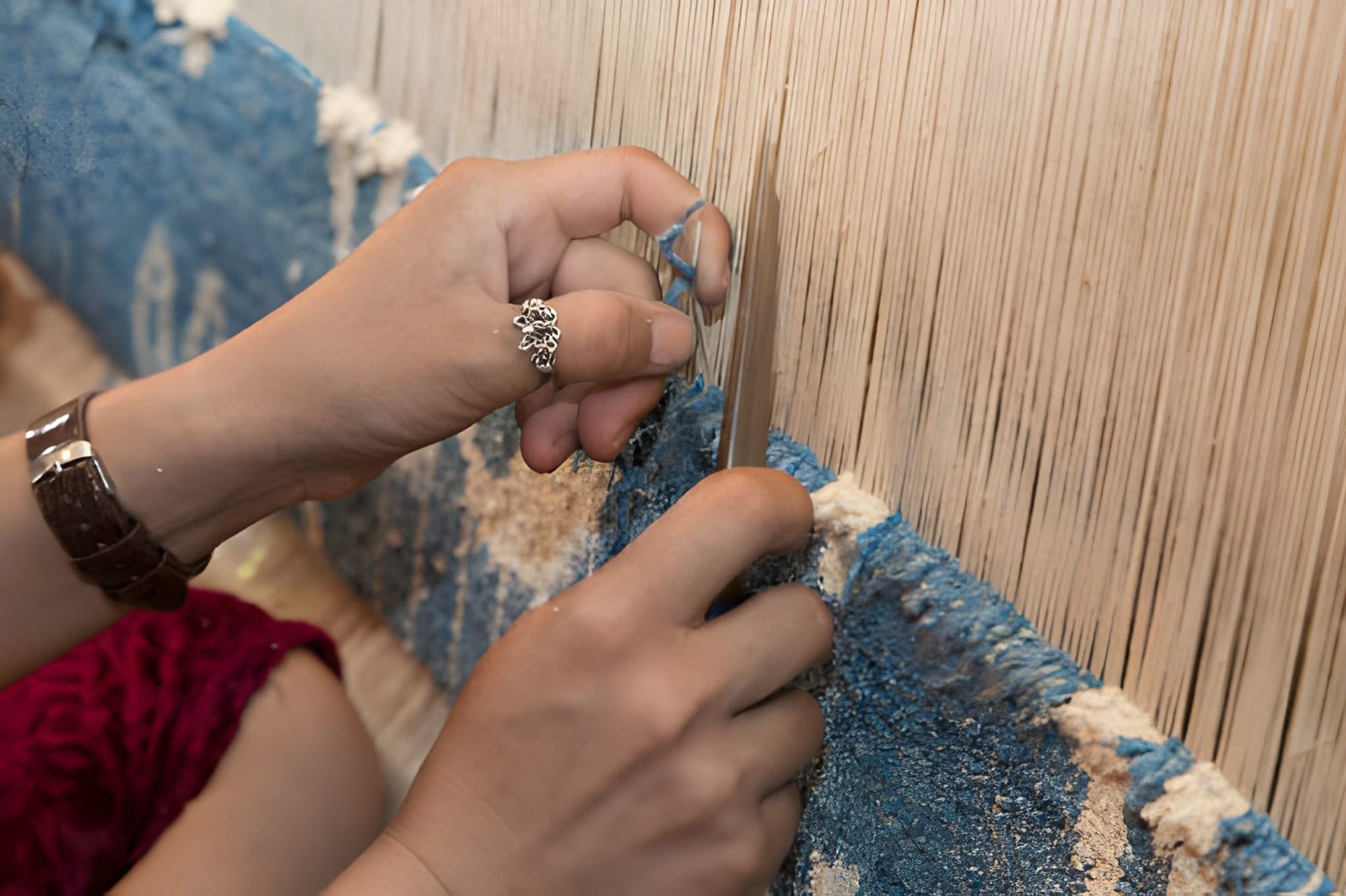
Hand knotting represents the pinnacle of carpet artistry, a disciplined and meditative practice that has remained essentially unchanged for centuries. It is performed on massive vertical wood frameworks called loom-shafts. The master weaver loops raw yarn around adjacent vertical warp threads, ties a specialized Persian or Tibetan knot, draws it down tight, and clips the excess thread with a curved knife.
This knotting sequence is repeated millions of times, row by row across the loom width. After completing each row of knots, the weaver feeds a horizontal weft thread through the warp and beats it flat with a heavy metal comb to compress the fabric tight. Because each knot is independent, there is no need for backing latex. The rug is naturally self-binding, highly flexible, breathable, and virtually indestructible.
| Production Time | 4 weeks to 6 months depending on knot density |
| Knot Density | 80 to 300 KPSI (Knots Per Square Inch) |
| Backing Material | None. Woven warp structure serves as backing |
| Best For | Intricate details, heirloom investment, legacy lifespans |
| Typical Lifespan | 50 to 100+ years (often handed down generations) |
Which technique is right for your project?
| Feature | Hand Tufted | Hand Knotted |
|---|---|---|
| Execution Mechanism | Hand-guided pneumatic gun driving loops through fabric backing | Yarn individually knotted around warp threads row-by-row on loom |
| Structural Density | Sparsely distributed pile backed with non-toxic adhesive seal | Extremely dense interlocking fibers, holding up to 300 knots per inch |
| Tactility & Feel | Plush, luxurious cushion, excellent cut-and-loop variation | Firm, flexible, supple feel that behaves like an exquisite tapestry |
| Design Versatility | Perfect for heavy curves, bold strokes, bento layers, and geometry | Ideal for fine lines, pixel-perfect floral maps, or intricate details |
| Investment & Cost | Moderately accessible, excellent quality-to-value ratio | Premium architectural tier investment due to meticulous craft scale |
The Tools of the Loom.
No machines, no automated printing. Only the weight of simple, physical instruments guided by years of muscle memory.
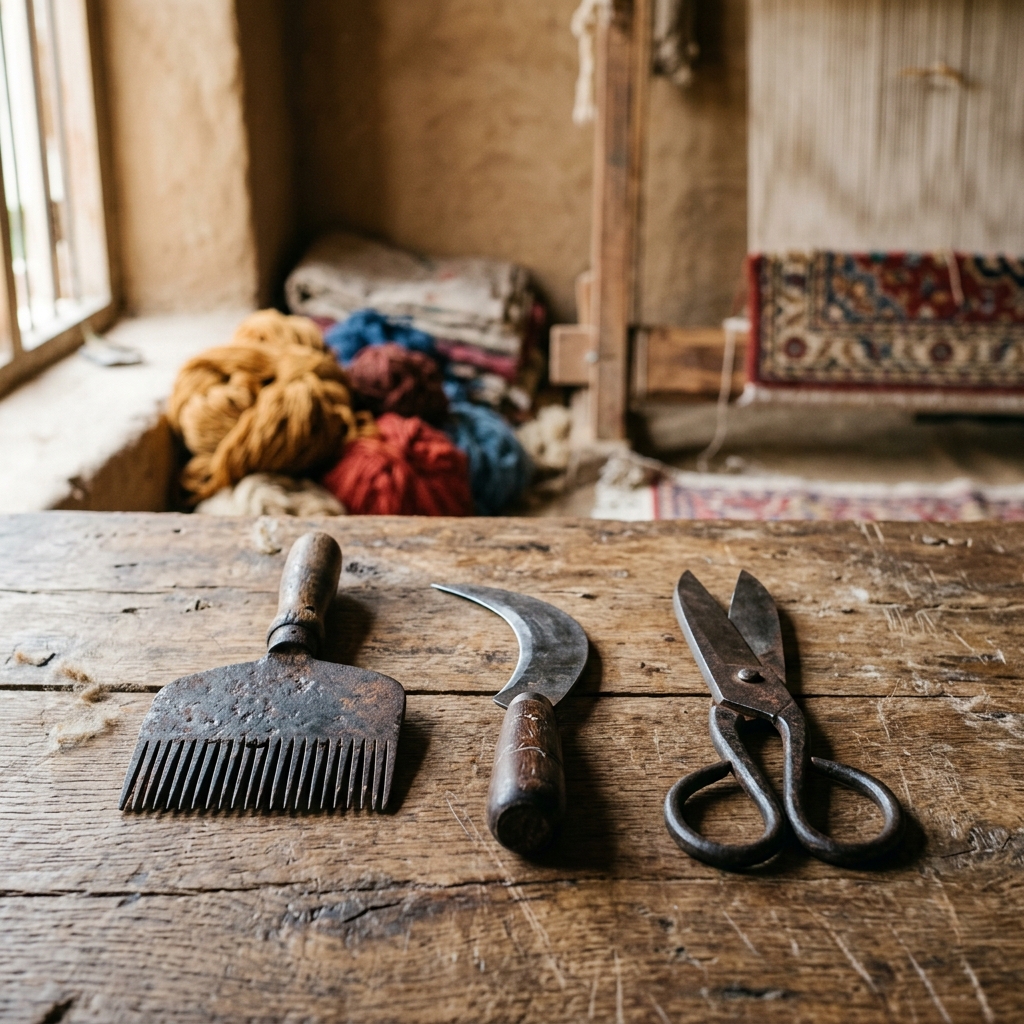
Hand-Knotted Instruments
For hand-knotted rugs, the craft is entirely mechanical, relying on three essential instruments that haven't changed in form for hundreds of years:
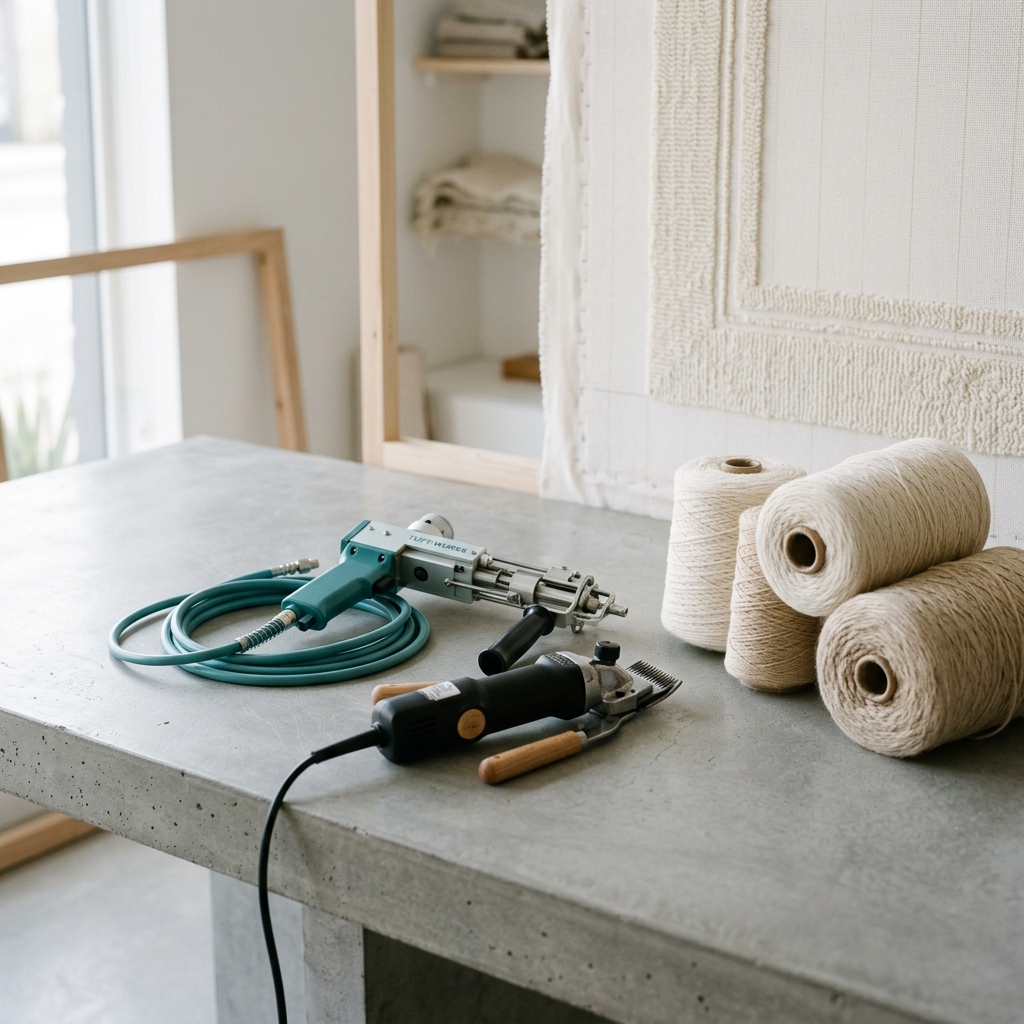
Hand-Tufted Instruments
For hand-tufted rugs, speed and dimensional sculpture are made possible by precise handheld mechanical and electric carving devices: